
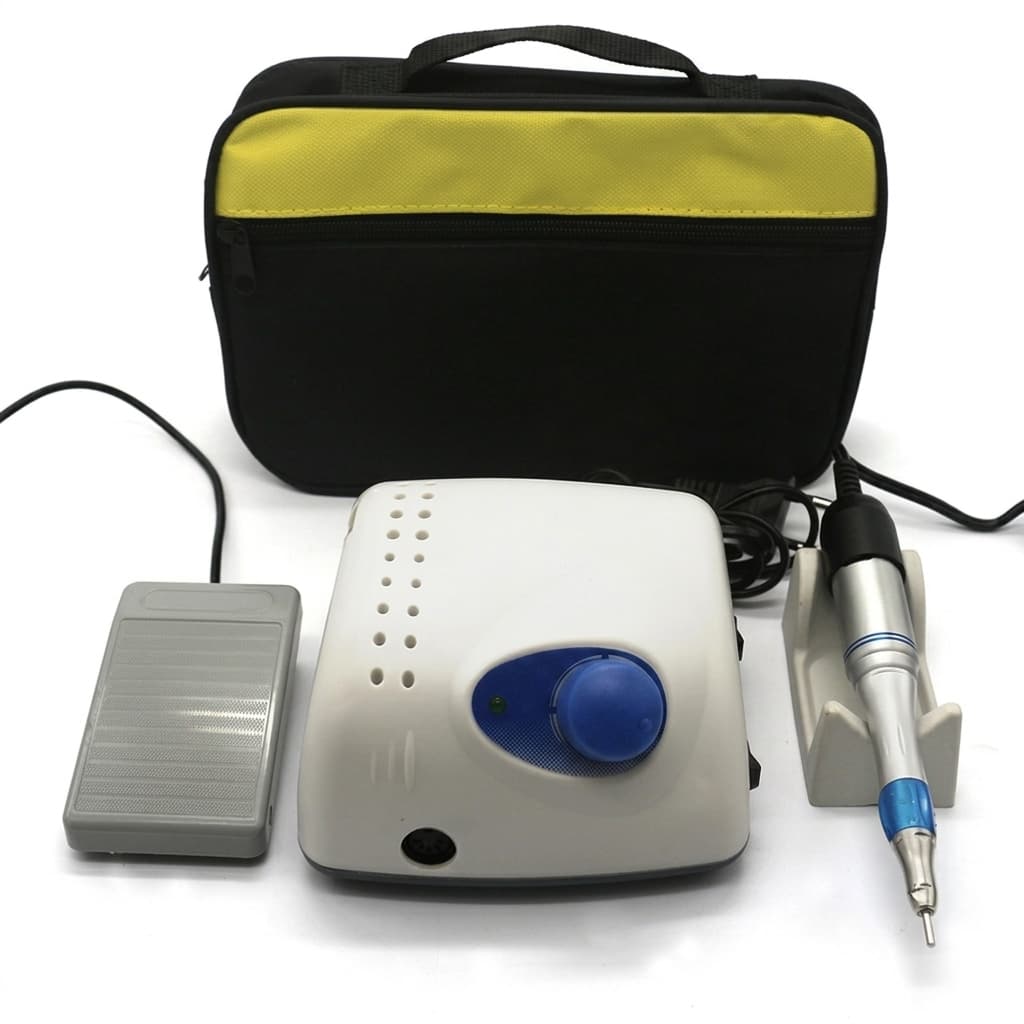
How to Select a Micro BLDC Motor for Medical Devices: An Engineering Deep Dive
Engineering notes on specifying low-noise, high-reliability micro brushless DC motors for surgical tools, pumps, and portable medical equipment, including EMI and thermal constraints.
When specifying a motor for medical devices, such as a high-speed surgical hand tool, respiratory device, or compact pump, engineers must balance torque density with regulatory, acoustic, and thermal requirements. Micro Brushless DC (BLDC) motors are often selected for these applications because electronic commutation can reduce brush dust and service wear when the motor is validated under the real load profile.
However, selecting the right micro BLDC motor goes far beyond matching speed and torque from a basic catalog. In medical applications, the operational environment dictates application-specific engineering constraints. This guide covers factors OEM buyers and engineers should define during the motor selection and validation process.
1. Acoustic Noise and Vibration Limits (NVH)
In hospital environments, operating rooms, and particularly in bedside home-care devices, acoustic noise is heavily scrutinized. A motor operating at 40,000 RPM in a dental tool can generate significant high-frequency whine, leading to operator fatigue and patient anxiety.
Engineering Controls for NVH:
- Coreless (Slotless) Stator Design: Selecting a coreless micro BLDC motor can reduce cogging torque (the magnetic detent feeling caused by the rotor's magnets pulling on stator iron teeth). The actual noise benefit should be checked at the target speed, load, mounting method, and driver settings.
- Precision Bearings and Pre-loading: Bearing grade, lubricant, cage material, and axial pre-load should match the required speed, radial load, sterilization exposure, and acoustic target. Supplier drawings and inspection plans should define how radial play and resonance are controlled.
- Dynamic Balancing: For rotors spinning above 10,000 RPM, rigorous dynamic balancing to ISO 1940-1 G1.0 or G0.4 grades is essential. This prevents out-of-balance forces from transferring vibration into the device housing.
- Target Metrics: For bedside respiratory devices, set a device-level noise target first, then allocate the motor contribution under a defined test distance, enclosure, mounting stiffness, speed, load, and acoustic environment.
2. Autoclavability and Environmental Sealing
Surgical hand tools (such as bone drills or endoscopic shavers) must undergo repeated sterilization. The standard steam autoclave cycle exposes the tool to 134°C (273°F) at 100% humidity and 2+ bar pressure for up to 18 minutes.
Designing for the Autoclave:
Many catalog BLDC motors are not designed for repeated steam exposure. A sterilizable motor program should review:
- Encapsulated Windings: The stator coils must be vacuum-potted with high-temperature epoxy to prevent steam ingress from causing electrical shorts.
- Specialized Magnets: Neodymium magnets can demagnetize at high temperatures. The motor must utilize high-temperature grades (e.g., NdFeB UH or EH grades) or Samarium Cobalt (SmCo) magnets.
- Corrosion-Resistant Housing: 300-series or 400-series stainless steel housings with laser-welded seams.
- Sealed Feedback Systems: Standard optical encoders fail in steam. Autoclavable motors rely on sensorless control or hermetically sealed high-temperature Hall effect sensors.
3. Thermal Management and Patient Safety (IEC 60601-1)
Medical devices held by the operator or placed directly against the patient's skin need a documented surface-temperature assessment against the applicable edition of IEC 60601-1, the contact duration, applied part classification, ambient condition, and intended user environment.
Intermittent duty-cycle thermal stabilization vs project limit
How to mitigate heat generation:
- Maximize Motor Constant ($K_m$): Optimize the copper fill factor to reduce I²R (resistive) losses. A higher $K_m$ means more torque is generated per watt of waste heat.
- Define Accurate Duty Cycles: Communicate your exact load profile (e.g., 20 seconds ON at 50mNm, 40 seconds OFF). A motor that overheats under continuous load may be perfectly acceptable and much lighter/smaller if sized for an intermittent duty cycle.
4. EMI / EMC Compliance (IEC 60601-1-2)
Electromagnetic interference is a significant hurdle in medical device certification. A poorly designed motor and driver can emit switching noise that interferes with ECGs, pacemakers, or nearby monitors.
- PWM Switching Noise: The Electronic Speed Controller (ESC) uses Pulse Width Modulation to drive the BLDC motor. Fast switching (high $dV/dt$) creates radiated and conducted emissions.
- Mitigation: Look for motors with integrated shielding, twisted-pair shielded cables for Hall sensor feedback, and work with driver engineers who implement appropriate ferrite beads, common-mode chokes, and localized decoupling capacitors.
5. Medical OEM Procurement Checklist
When evaluating a micro BLDC motor factory for a medical program, ask the following questions:
- Quality Management System: Is the facility ISO 13485 certified, or strictly ISO 9001?
- Traceability: Can the factory provide batch-level traceability for critical components (magnets, bearings, wire insulation)?
- Change Control (PCN): Can the supplier commit to a Process Change Notification (PCN) workflow so adhesives, wire insulation, bearings, magnets, or harness materials are not substituted after production lock without review?
- Customization: Are they willing to customize the shaft (flats, cross-holes, specialized gears) and wire harness (medical-grade biocompatible silicone jackets)?
Pilot Validation & Next Steps
Sourcing a micro BLDC motor for medical applications is not a transactional purchase; it requires early agreement on requirements, verification samples, material traceability, and change control. EMI, thermal, acoustic, or sterilization gaps can become expensive late-stage redesign issues.
At Micro BLDC, we work with global OEM buyers to define noise profiles, thermal load tests, material constraints, and mechanical interfaces before advancing to pilot builds and mass production review.
OEM RFQ Blueprint
To reduce quoting friction, copy and paste this template into your inquiry:
Application: [e.g., Surgical Bone Drill]
Voltage: [e.g., 24VDC battery]
Load Profile: [e.g., 30mNm for 20s, 10s OFF]
Max Diameter: [e.g., 22mm]
NVH Target: [e.g., <40 dBA at 30cm]
Sterilization: [e.g., 134°C Autoclave, Yes/No]
If your engineering team is evaluating micro BLDC motors for a new medical device, contact our sales engineering team to discuss your target specifications and request validation samples.
Author

Categories
More Posts
Micro BLDC Motor Sizing Guide for Compact Robotics
A practical engineering guide on calculating RMS torque, gear ratio efficiency, and thermal limits when specifying micro BLDC gear motors for robotic joints and grippers.
Coreless Brushless vs Traditional BLDC Motors: An Engineering Comparison
A deep-dive comparison between coreless (slotless) micro BLDC motors and slotted BLDC motors, covering inertia, PWM frequency requirements, cogging torque, and thermal time constants.